

Kindergeld is a government benefit that helps parents raise their children in Germany. It provides steady monthly financial support to reduce family expenses.
Both German citizens and eligible foreign residents can apply for this assistance. Learning how to apply for Kindergeld child benefit ensures you secure your child’s financial stability early.
Understanding Kindergeld in Germany
Kindergeld is a national child benefit provided by the German government to help parents with child-related expenses.

It is managed by the Federal Employment Agency through its Family Benefits Office, known as the Familienkasse.
Every eligible parent or guardian can apply for this support regardless of their income. The main goal of Kindergeld is to ensure that all children living in Germany receive equal financial assistance.
What Is Kindergeld?
Kindergeld is a monthly payment granted to parents or guardians for each dependent child.
The benefit aims to ease financial burdens and promote family welfare across Germany. Parents can receive payments directly into their bank accounts once their applications are approved.
Even foreign residents who legally live and work in Germany may qualify under certain conditions.
Who Provides Kindergeld?
The Familienkasse, operating under the Bundesagentur für Arbeit, is responsible for processing and distributing Kindergeld payments.
This office works closely with tax authorities to ensure eligibility and payment accuracy. The system is highly structured and transparent, allowing applicants to track their claims.
Families are encouraged to communicate directly with their local Familienkasse for any application updates.
Eligibility Criteria for Kindergeld
Eligibility determines who can receive the benefit and under what circumstances. Parents and guardians must meet basic residency and child-related requirements.
These conditions help the government ensure that financial support reaches families legally residing in Germany. The rules apply equally to both German citizens and foreign residents with valid documentation.
General Requirements
You must either live or work in Germany to qualify for Kindergeld. The child must live in your household or depend financially on you.
Applicants can be German citizens, EU/EEA residents, or non-EU nationals with residence permits that allow employment. Parents who work abroad for a German employer may also qualify in certain cases.
Eligible Children
Kindergeld covers biological, adopted, step, and foster children. In some cases, grandchildren under the applicant’s care may also qualify.
Each child must be registered in Germany and have a valid tax identification number. Proof of guardianship or custody is essential if the child does not reside with both parents.
Age Limits for Children
Children are eligible until their 18th birthday by default. However, payments can continue until age 25 if they are studying, undergoing vocational training, or seeking employment.
Unemployed children under 21 years old may also qualify if registered at an employment office. Each case requires updated documents to confirm the child’s current status.
Documents Required for Application
A complete set of documents ensures smooth and timely processing of your application. Providing accurate information reduces the risk of delays or rejections.
Families should prepare both identification and child-related records before submission. Keeping copies of all documents is highly recommended for reference.
Main Documents
Applicants must submit the Kindergeld application form (KG1) fully completed and signed.
Identification documents such as passports or residence permits are required. The child’s birth certificate or adoption papers confirm eligibility.
Both parent and child must provide their Tax Identification Numbers, and proof of residence (Anmeldung) in Germany is necessary.
Additional Supporting Documents
Foreign residents may need to submit a valid residence permit or proof of employment.
Students should attach enrollment certificates, and trainees must include training contracts.
Separated parents may need to show custody or payment agreements. Providing these additional proofs strengthens your application and prevents future issues.
Step-By-Step Application Process
The Kindergeld application process is straightforward when you follow the official procedure. Applications can be submitted either online or by mail through the Familienkasse.
Accuracy and document completeness are the most important factors for quick approval. Below are the essential steps you must take to apply properly.
Application Steps
Follow these clear steps to complete your Kindergeld application quickly and correctly. Each step ensures your submission is accurate and processed without delay.
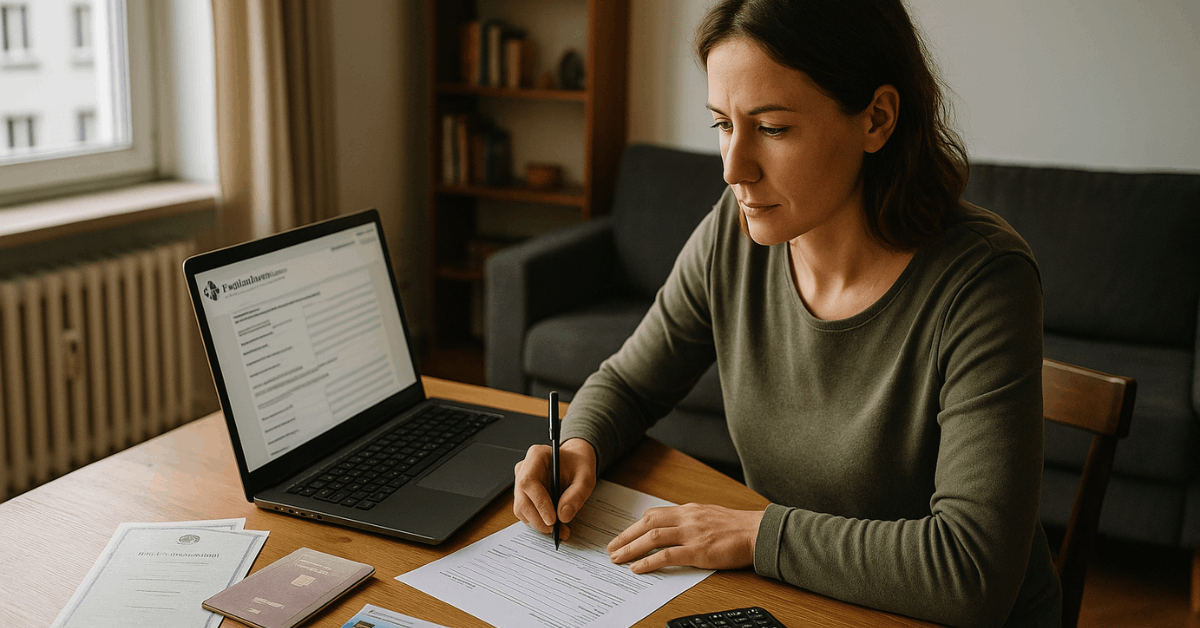
- Download the KG1 form from the official Bundesagentur für Arbeit website.
- Fill out the form carefully, ensuring all personal and child-related information is correct.
- Attach required documents, including IDs, tax numbers, and birth certificates.
- Submit the application by mail or directly to your local Familienkasse.
- Wait for confirmation, which usually arrives within four to eight weeks depending on volume.
Where to Apply?
Applications are handled by your local Familienkasse office according to your residential address. Public service employees must apply through their employer’s payroll office.
You can also contact the Familienkasse through their online portal for guidance. Always keep your reference number for future correspondence.
Payment Amount and Schedule
Kindergeld payments are structured to provide equal benefits to all families. Since 2023, the amount per child has been standardized to simplify the process.
Payments are made monthly, ensuring continuous support for families across Germany. The funds are transferred directly into the applicant’s bank account.
Payment Rates
Each child currently receives €250 per month, regardless of birth order. This fixed rate ensures equal support among all families.
Payment continues until the child reaches the eligible age limit based on their education or work status. Adjustments occur automatically if eligibility changes during the benefit period.
Payment Dates
Payments are issued monthly, and the schedule is determined by the last digit of your Kindergeld number. This system helps the Familienkasse manage disbursements efficiently.
Payments are usually credited toward the end of the month. Always check your approval letter to verify your exact payment day.
Processing Time and Approval Notification
The approval process may vary depending on regional workload and documentation accuracy. Applicants should remain patient but prepared to follow up when necessary.
Most applications are processed within a few weeks if all requirements are met. It’s essential to keep your contact details updated to receive notifications promptly.
Processing Period
Processing usually takes four to eight weeks from the date of submission. Complex cases involving multiple children or international documents may take longer.
The Familienkasse reviews all forms and supporting materials thoroughly. Delays often occur due to incomplete forms or missing identification proofs.
Approval Notification
Once approved, you’ll receive an official Bewilligungsbescheid (approval notice) by mail. This document confirms your eligibility and payment start date.
It also specifies the monthly amount and payment frequency. Always store this notice safely for future reference or renewal purposes.
Renewals and Updates
After approval, maintaining accurate records is vital to keep receiving Kindergeld. The Familienkasse requires applicants to report any major life changes immediately.
Keeping your data up to date helps prevent overpayments or delays. Parents should review their information at least once a year.
Information to Update
Report changes in residence, bank account, or custody arrangements. Notify the office if your child completes school or begins vocational training.
Families moving abroad must declare their new address and employment status. Keeping communication open with Familienkasse helps maintain uninterrupted payments.
Renewal Guidelines
Renewal is rarely required unless there is a change in status. However, long-term non-German residents may need to revalidate their residence permit.
Keeping copies of all correspondence helps speed up any future updates. Always review letters or reminders sent by the Familienkasse to stay compliant.
Kindergeld for Foreign Residents
Foreign families who live or work in Germany can receive Kindergeld under specific conditions. Legal residence or employment is the main factor determining eligibility.
Both EU and non-EU citizens must meet certain documentation requirements. Understanding these conditions helps foreign parents prepare their applications efficiently.
EU and EEA Citizens
Citizens from EU or EEA countries are usually eligible if they live or work in Germany. They must provide proof of registration and a valid Tax Identification Number.
Family members living abroad may also qualify if one parent works in Germany. This rule supports cross-border families and ensures equal treatment.
Non-EU Nationals
Non-EU nationals must hold a valid residence permit that allows employment or self-employment. They must also have a stable home and income in Germany.
Additional documents such as work contracts or tax returns may be requested. Ensuring that your permit remains valid throughout the benefit period is crucial.
Kindergeld vs. Child Tax Allowance (Kinderfreibetrag)
Germany offers two systems to support parents financially — Kindergeld and the Child Tax Allowance. Both serve to reduce the financial pressure of raising children.
The government automatically compares which option benefits you more during tax assessment. Understanding their difference helps families maximize their savings.
Comparison Overview
Kindergeld provides monthly payments, while Kinderfreibetrag reduces taxable income. Low- and middle-income families usually benefit more from Kindergeld.
High-income earners often find the tax allowance more advantageous. The tax office (Finanzamt) automatically calculates the better option each year.
Common Reasons for Rejection
Rejections often occur due to missing or inaccurate information. Understanding common mistakes helps you avoid unnecessary delays.
Most errors are preventable with careful attention to detail. Applicants should verify every document before submission.
Typical Issues
Mistakes during the Kindergeld process are common but easy to avoid. Here are the typical issues that often cause delays or rejections.
- Missing residence registration or outdated ID.
- Incorrect Tax ID for the child or parent.
- Incomplete or unsigned forms.
- Failure to report changes in address or custody.
Conclusion – Secure Your Child’s Financial Support Today
Applying for Kindergeld child benefit in Germany helps ensure steady financial assistance for your family.
By meeting eligibility criteria and submitting accurate documents, you can receive payments smoothly.
Always update your information and follow the official process to avoid interruptions. Taking this step gives your child reliable financial support and strengthens your household’s stability.